Everywhere you look, there's another article about the growing rate of childhood obesity. As they say, the acorn doesn't fall far from the tree--you don't have to look far to see that obesity is not only a problem for children--it's also a big problem for their parents. But there are also overweight children who have normal weight parents who eat a healthy diet. What's going on here?
Several recent studies may offer a clue. How you feed your baby in the first months of life may set them up for being overweight later. (Babies can also be "programmed" for being overweight during pregnancy.) A recent study in the American Journal of Health Promotion found that almost a third of infants could be categorized as overweight or obese by the age of 9 months. A study in Pediatrics found that babies fed a Protein Hydrolysate formula had slower weight gains than those fed regular cow's milk formula. Study authors are not sure what caused this effect; the protein content or amino acid profile, which varied between the two formulas.
Should we be putting babies on a diet? No! But we should be looking a little closer at how we feed babies, putting more emphasis on breastfeeding and how the nutrient makeup of infant formula could program a child's future health.
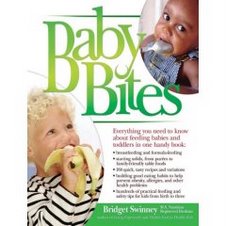
For more tips on preventing childhood obesity, starting early, check out my book Baby Bites!
Tuesday, January 11, 2011


Sunday, December 5, 2010
Hectic Holidays? Try Soup
Nothing warms the heart on a wintry day like a nice bowl of soup. And during the hectic holiday season, it's an easily accessible dish. It's a great do-ahead meal for the crock pot and an easy dish to throw together with leftovers. There are also some delicious choices out of a can--yes a can. If you haven't strolled down the soup aisle in a while, you might be surprised with new varieties that sound like restaurant food: Italian Wedding, Vegetable Orzo, Chicken Mushroom with Barley. (and they have just 480 mg of sodium--part of Campbell's Healthy & Delicious line http://bit.ly/ggBOYi.)
Here are a few ideas and recommendations.
*Homemade Bean soups: I love split peas and lentils because you don't have to remember to soak them overnight. Beans soups work great in the crock pot. If you want to do other types of beans, do the quick soak method--my favorite. Cover the beans with water and bring to a boil for several minutes. Turn off the heat, cover and soak for 1 hour. No matter what kind of beans you make, the spices are pretty much the same--onion, garlic, bay leaf, thyme. If you are making beans with a south of the border flare, add cumin and chili powder. For lots of tips and recipes check out: www.americanbean.org
Semi-homemade and Canned Bean Soups: I love Progresso bean soups; minimum of ingredients and low in fat. For example, the Progresso Lentil soup has 150 calories, 2 grams of fat and (ouch) 870 mg sodium. But you can easily turn canned beans into a soup by pureeing in the blender or adding a broth, (black bean soup: http://bit.ly/eFIGdI) some leftover barley and vegetables for a quick appetizer soup. Here's a great recipe using both canned condensed tomato soup as well as canned beans. http://bit.ly/eEVYxf
*Homemade stews: A stew is like a soup, only thicker--at least that's how I look at it. Although I'm not a fan of American stew, International stews are growing on me--in fact I made Beef Caldito last night! It's easy to turn an old fashioned stew into a gourmet dish by switching a few ingredients. Think Boeuf Bourginon (red wine, thyme, bay leaves) Caldito (chiles, cumin, chile powder). Check out this Caribbean themed stew that includes sweet potatoes: http://bit.ly/gWYJAU Canned soup can simplify a stew; check out this pork stew: http://bit.ly/grMMRx.
Talkin' soup is hard to keep brief--and it's making me hungry. Stay tuned for the next post about vegetable soups!
Here are a few ideas and recommendations.
*Homemade Bean soups: I love split peas and lentils because you don't have to remember to soak them overnight. Beans soups work great in the crock pot. If you want to do other types of beans, do the quick soak method--my favorite. Cover the beans with water and bring to a boil for several minutes. Turn off the heat, cover and soak for 1 hour. No matter what kind of beans you make, the spices are pretty much the same--onion, garlic, bay leaf, thyme. If you are making beans with a south of the border flare, add cumin and chili powder. For lots of tips and recipes check out: www.americanbean.org
Semi-homemade and Canned Bean Soups: I love Progresso bean soups; minimum of ingredients and low in fat. For example, the Progresso Lentil soup has 150 calories, 2 grams of fat and (ouch) 870 mg sodium. But you can easily turn canned beans into a soup by pureeing in the blender or adding a broth, (black bean soup: http://bit.ly/eFIGdI) some leftover barley and vegetables for a quick appetizer soup. Here's a great recipe using both canned condensed tomato soup as well as canned beans. http://bit.ly/eEVYxf
*Homemade stews: A stew is like a soup, only thicker--at least that's how I look at it. Although I'm not a fan of American stew, International stews are growing on me--in fact I made Beef Caldito last night! It's easy to turn an old fashioned stew into a gourmet dish by switching a few ingredients. Think Boeuf Bourginon (red wine, thyme, bay leaves) Caldito (chiles, cumin, chile powder). Check out this Caribbean themed stew that includes sweet potatoes: http://bit.ly/gWYJAU Canned soup can simplify a stew; check out this pork stew: http://bit.ly/grMMRx.
Talkin' soup is hard to keep brief--and it's making me hungry. Stay tuned for the next post about vegetable soups!
Monday, October 4, 2010
Back to School Lunch-PART 2
Hello my lunch-packing friends,
It's time for Part 2 of Our Back to School Lunch Series.
Can you think outside the sandwich for a moment? If so, read on; we'll get to sandwiches at the end.
Think of lunch in 3 parts: you've got the entree--something that has protein and carbs of some sort, then you've got the fruits and/or veggies. For a visual, think about this--the fruit and veggies should take up half the "plate."
You can also mix it up--putting the protein, veggies, fruit and carbs all together. Visualize this: spinach salad with chicken & mango salad wrapped up in a whole grain tortilla.
Below is a 10 day menu for your favorite brown-bagger--and it doesn't have to be a kid!
Meatless Monday: Bean burrito with grated cheese, avocado and cilantro. Try black beans for a change. On the side--a container of salsa and fat-free sour cream or plain greek yogurt and some baked blue tortilla chips. (yep-salsa counts as a veggie!) For dessert: mango slices or peach fruit cup.
Tuesday: Chili con carne in a thermos. On the side: grated light cheddar, baby carrots. For dessert: tapioca pudding cup.
Wednesday: S'more Lunch: Graham cracker, peanut butter (sunflower butter for allergy-free zones) and banana sandwiches with mini chocolate chips. On the side: Yogurt tube
Thursday: Deli wrap: Put your fav deli meat with a slice of low fat American cheese or grated mozzarella into a wrap with favorite condiments. Slip in some thinly sliced red or yellow peppers and a few sliced olives. On the side: apple slices
Fishy Friday: Mix canned salmon (remove the skin) with light cream cheese, dill and garlic powder in the blender or food processor. Spread on: bread, crackers, celery, etc. On the side: cucumber slices with lime, fresh pear.
Meatless Monday: Dippin Lunch: Hummus with whole grain pita triangles, celery, cucumber and carrot sticks for dipping. Dessert; frozen melon balls.
Tuesday: Lettuce wraps with roast beef: Using leftover or deli roast beef wrap lettuce around it and cucumber strips.
Wednesday: Chicken & rice salad: Using leftover chicken, and rice (you can also use leftover barley, quinoa or bulgar), add dried cranberries or raisins and chopped red pepper and julienne carrots. Add a little vinaigrette.
SANDWICH TIME:
Above are lots of sandwich-free ideas. What if you or kid still loves a good sandwich? No problem...just don't forget to add the fruits and veggies to go with!
The trick with sandwiches, is how to make them different day after day:
1. Make them into finger sandwiches, which are especially great for kids of all ages who don't like the crust.
2. Cut them into cute shapes using a cookie cutter.
3. Use different colored bread: brown & white for example
4. Use different kinds of bread: French bread, whole grain bread, raisin bread. There's a bread that works well with every filling.
5. Add unexpected ingredients. I've seen corn added to sandwiches before! If you can get a whole of fresh herbs, a little fresh parsley or basil adds a nice touch to sandwiches.
Above all, follow the golden rule for a lunch that your kid won't toss or trade: Get him involved in the process. At the store, or when making the grocery list. Ask him what he wants for lunch. Let him help put the lunch together. And don't things in his lunch that he won't eat at home--there is probably a smaller chance he will eat it at school (unless of course all of his friends are eating it!)
Bon Appetit!
It's time for Part 2 of Our Back to School Lunch Series.
Can you think outside the sandwich for a moment? If so, read on; we'll get to sandwiches at the end.
Think of lunch in 3 parts: you've got the entree--something that has protein and carbs of some sort, then you've got the fruits and/or veggies. For a visual, think about this--the fruit and veggies should take up half the "plate."
You can also mix it up--putting the protein, veggies, fruit and carbs all together. Visualize this: spinach salad with chicken & mango salad wrapped up in a whole grain tortilla.
Below is a 10 day menu for your favorite brown-bagger--and it doesn't have to be a kid!
Meatless Monday: Bean burrito with grated cheese, avocado and cilantro. Try black beans for a change. On the side--a container of salsa and fat-free sour cream or plain greek yogurt and some baked blue tortilla chips. (yep-salsa counts as a veggie!) For dessert: mango slices or peach fruit cup.
Tuesday: Chili con carne in a thermos. On the side: grated light cheddar, baby carrots. For dessert: tapioca pudding cup.
Wednesday: S'more Lunch: Graham cracker, peanut butter (sunflower butter for allergy-free zones) and banana sandwiches with mini chocolate chips. On the side: Yogurt tube
Thursday: Deli wrap: Put your fav deli meat with a slice of low fat American cheese or grated mozzarella into a wrap with favorite condiments. Slip in some thinly sliced red or yellow peppers and a few sliced olives. On the side: apple slices
Fishy Friday: Mix canned salmon (remove the skin) with light cream cheese, dill and garlic powder in the blender or food processor. Spread on: bread, crackers, celery, etc. On the side: cucumber slices with lime, fresh pear.
Meatless Monday: Dippin Lunch: Hummus with whole grain pita triangles, celery, cucumber and carrot sticks for dipping. Dessert; frozen melon balls.
Tuesday: Lettuce wraps with roast beef: Using leftover or deli roast beef wrap lettuce around it and cucumber strips.
Wednesday: Chicken & rice salad: Using leftover chicken, and rice (you can also use leftover barley, quinoa or bulgar), add dried cranberries or raisins and chopped red pepper and julienne carrots. Add a little vinaigrette.
SANDWICH TIME:
Above are lots of sandwich-free ideas. What if you or kid still loves a good sandwich? No problem...just don't forget to add the fruits and veggies to go with!
The trick with sandwiches, is how to make them different day after day:
1. Make them into finger sandwiches, which are especially great for kids of all ages who don't like the crust.
2. Cut them into cute shapes using a cookie cutter.
3. Use different colored bread: brown & white for example
4. Use different kinds of bread: French bread, whole grain bread, raisin bread. There's a bread that works well with every filling.
5. Add unexpected ingredients. I've seen corn added to sandwiches before! If you can get a whole of fresh herbs, a little fresh parsley or basil adds a nice touch to sandwiches.
Above all, follow the golden rule for a lunch that your kid won't toss or trade: Get him involved in the process. At the store, or when making the grocery list. Ask him what he wants for lunch. Let him help put the lunch together. And don't things in his lunch that he won't eat at home--there is probably a smaller chance he will eat it at school (unless of course all of his friends are eating it!)
Bon Appetit!
Wednesday, September 15, 2010
Back to School Lunch-PART 1
So-- you've made it through the second week of school and are patting yourself on the back for a job well done--kids seemed to have eaten their lunches (at least the lunchbag comes back empty) and all is well. Only 60 more lunches to make until the Winter Holidays... but who's counting?
If you are already wondering how you can come up with healthy lunch ideas that your kids will actually eat, the following tips will help make sure your kids happily anticipate their lunch instead of tossing or trading it.
1. Get a kid's perspective. "Buy in" is not only necessary in the business world, it's also a big plus when getting kids to eat. Get your kid involved in the whole process--from making the grocery list to making choices on a daily basis. Do you want an apple or a fruit cup today? A wrap or a sandwich? Bring or buy? Kids have very little control over their day once they leave home--giving them a choice (but a choice you approve of) makes them feel more independent. There are also lots of teachable moments involved--your kid wants chips--explain the benefit of baked over fried... (FOR MORE TIPS SEE PART 2 OF THIS BLOG-PACKING A LUNCH--coming soon!)
2. Buy: When there is no time to pack a lunch, there are 2 options: buy or bring a pre-boxed lunch. While school lunches have gotten their share of brow-beating, it's not as bad as you think. School lunch does have to meet USDA nutritional guidelines, which admittedly are not as healthy as most dietitians would like, they do insure your child gets a balanced, nutritious lunch. Burgers and hot dogs on the menu--what about that? Here's what's not on the menu--hot dogs are reduced fat because they're made with turkey, beef is often a beef-soy mix--also to reduce the fat. There are also some teachable moments at the lunch line. Schools have the option of "offer" vs "serve". In our schools, it's "offer"--that means your kid needs to pick 4 things off the line. The good news, is again, if your kid picks it, he is more likely to eat it. The bad news is, he can walk away with the main entree, (which could be pizza), along with bread and corn. Yep it's definitely a starchy meal...here's where mom's or dad's influence comes in.
3. Pre-packaged meals. Lunch nirvana for kids and moms alike is often lunch in a box. Yes, I'm talking Lunchables. Over the years, Lunchables has decreased fat, sodium and calories—more than 20% . Now, some options include bottled water, fruit and bread made with whole grains. I see Lunchables as not an everyday thing, but a great option when all you have is 15 seconds to put lunch together. I also see some teachable moments for Lunchables. They are perfect portions for a kid--for overweight kids, they provide a moderate calorie, balanced lunch that has “cool” appeal.
4. Send a little love. (And I don't mean a candy bar!) Sending a little note in the lunchbag is a great way to let your child know you're thinking about him. A post-it note is perfect for this. Jot out a little poem, or just say I love you! You can help a Boys and Girls Club near you by making a promise to send a lunchnote! Go to lunchnotepromise.com and make the pledge and Lunchables will donate $1 to a Boys & Girls Club in your state. And there are lots of really cute notes to download too.
(Disclosure: I have a worked as a consultant for Lunchables for the last 5 years. Why? I believe they offer an acceptable lunch option for kids and they consistently strive to improve on the nutrient content of their products.)
If you are already wondering how you can come up with healthy lunch ideas that your kids will actually eat, the following tips will help make sure your kids happily anticipate their lunch instead of tossing or trading it.
1. Get a kid's perspective. "Buy in" is not only necessary in the business world, it's also a big plus when getting kids to eat. Get your kid involved in the whole process--from making the grocery list to making choices on a daily basis. Do you want an apple or a fruit cup today? A wrap or a sandwich? Bring or buy? Kids have very little control over their day once they leave home--giving them a choice (but a choice you approve of) makes them feel more independent. There are also lots of teachable moments involved--your kid wants chips--explain the benefit of baked over fried... (FOR MORE TIPS SEE PART 2 OF THIS BLOG-PACKING A LUNCH--coming soon!)
2. Buy: When there is no time to pack a lunch, there are 2 options: buy or bring a pre-boxed lunch. While school lunches have gotten their share of brow-beating, it's not as bad as you think. School lunch does have to meet USDA nutritional guidelines, which admittedly are not as healthy as most dietitians would like, they do insure your child gets a balanced, nutritious lunch. Burgers and hot dogs on the menu--what about that? Here's what's not on the menu--hot dogs are reduced fat because they're made with turkey, beef is often a beef-soy mix--also to reduce the fat. There are also some teachable moments at the lunch line. Schools have the option of "offer" vs "serve". In our schools, it's "offer"--that means your kid needs to pick 4 things off the line. The good news, is again, if your kid picks it, he is more likely to eat it. The bad news is, he can walk away with the main entree, (which could be pizza), along with bread and corn. Yep it's definitely a starchy meal...here's where mom's or dad's influence comes in.
3. Pre-packaged meals. Lunch nirvana for kids and moms alike is often lunch in a box. Yes, I'm talking Lunchables. Over the years, Lunchables has decreased fat, sodium and calories—more than 20% . Now, some options include bottled water, fruit and bread made with whole grains. I see Lunchables as not an everyday thing, but a great option when all you have is 15 seconds to put lunch together. I also see some teachable moments for Lunchables. They are perfect portions for a kid--for overweight kids, they provide a moderate calorie, balanced lunch that has “cool” appeal.
4. Send a little love. (And I don't mean a candy bar!) Sending a little note in the lunchbag is a great way to let your child know you're thinking about him. A post-it note is perfect for this. Jot out a little poem, or just say I love you! You can help a Boys and Girls Club near you by making a promise to send a lunchnote! Go to lunchnotepromise.com and make the pledge and Lunchables will donate $1 to a Boys & Girls Club in your state. And there are lots of really cute notes to download too.
(Disclosure: I have a worked as a consultant for Lunchables for the last 5 years. Why? I believe they offer an acceptable lunch option for kids and they consistently strive to improve on the nutrient content of their products.)
Wednesday, June 16, 2010
Six Ways to Eat Blueberries for Breakfast
Ah, summer...although officially it's not summer yet. We've got all the essentials--kids out of school, pool's open and it's definitely hot enough to fry an egg on the sidewalk. And let's not forget all the summer fruit arriving at your local market: strawberries, blueberries, cherries and melon (to name a few) are yours for the tasting. Adding the bounties of summer to your table also do some favors for your health. Summer fruits are packed with vitamin C, potassium, fiber and water. Potassium is good for your blood pressure, vitamin C is good for your immune system and we all need fiber and water to help the digetive system do it's thing. I must mention all the antioxidants in your summer fruit that you could never get by taking a vitamin supplement!
Which brings me to one of my favorite summer fruits, blueberries. That bluish color that we love so much (except when it's on your white shirt) is provided by an antioxidant called anthocyanidin. Anthocyanidins neutralize free radicals that can lead to cataracts, glaucoma, heart disease, cancer and much more. Blueberries even contain 38% more of that antioxidant than red wine! Just imagine how healthy we'd all be if we had a cup of blueberries every night with dinner! Blueberries are also brain food--animals studies show they decrease oxidative stress in the brain, which could lead to Alzheimer's.
I just had a cup of them on top of my cereal, which inspired me to inspire you to eat them too!
Five Ways to Eat Blueberries at Breakfast:
1. On your cereal. What could be easier? (My personal fav is Kashi Go Lean Crunch) If you like your cereal hot in the summer, blueberries are great thrown in at the last minute of cooking. They burst and then you've got blue oatmeal. Yum!
2. Over a whole grain waffle. What I like to do is spread the waffle with natural peanut butter and then stick the blueberries in the holes. The berries stick to the peanut butter and you can pick it up with your hands. Fun for kids!
3. On your bagel. Spread some lowfat of FF cream cheese on that small, whole grain bagel and again stick the blueberries on. Make a smiley face to start your day on the right foot!
4. As a crisp or in a quick bread. OK so it sounds more like dessert, right? You can make a low sugar blueberry crisp with oatmeal and eat it for breakfast. Seconds anyone? Don't forget the milk!
5. In your pancakes--or crepes. I know what you're thinking--this dietitian likes sweets! Well, true, but here I'm advocating for a healthier pancake. Even Aunt Jemima makes whole wheat pancakes now. Or take the regular mix, throw in some wheat germ and oatmeal in place of some mix, and use milk instead of water. Mix in blueberries in the whole batch, or just poke them on top of the pancakes while they are cooking. Crepes are thinner so you can eat more of them and fill them to overflowing with berries and light whip cream.
6. In a race. Those with teenagers at home will like this one. See how many you can throw in the air and catch with your mouth. If you have a toddler at home, you can see who eats more--the baby or the dog waiting for the baby to throw them over the high chair!
7. I only promised 6 ideas, and here is the bonus. I don't count it in the official list because it is more of a thinking out loud idea. All the above are sweet ideas, but now that I'm trying to eat more protein (increases satiety, prevents muscle loss from aging etc) how could I fit blueberries into a hot, high protein menu? How about a blueberry omelette? A stretch to be sure, but you could put blueberries and cream cheese in the omelette. (Actually if you google this, you fill find lots of recipes!)
See you at Sam's--where I buy 2 quarts of blueberries a week! Enjoy!
More health benefits of blueberries.
Which brings me to one of my favorite summer fruits, blueberries. That bluish color that we love so much (except when it's on your white shirt) is provided by an antioxidant called anthocyanidin. Anthocyanidins neutralize free radicals that can lead to cataracts, glaucoma, heart disease, cancer and much more. Blueberries even contain 38% more of that antioxidant than red wine! Just imagine how healthy we'd all be if we had a cup of blueberries every night with dinner! Blueberries are also brain food--animals studies show they decrease oxidative stress in the brain, which could lead to Alzheimer's.
I just had a cup of them on top of my cereal, which inspired me to inspire you to eat them too!
Five Ways to Eat Blueberries at Breakfast:
1. On your cereal. What could be easier? (My personal fav is Kashi Go Lean Crunch) If you like your cereal hot in the summer, blueberries are great thrown in at the last minute of cooking. They burst and then you've got blue oatmeal. Yum!
2. Over a whole grain waffle. What I like to do is spread the waffle with natural peanut butter and then stick the blueberries in the holes. The berries stick to the peanut butter and you can pick it up with your hands. Fun for kids!
3. On your bagel. Spread some lowfat of FF cream cheese on that small, whole grain bagel and again stick the blueberries on. Make a smiley face to start your day on the right foot!
4. As a crisp or in a quick bread. OK so it sounds more like dessert, right? You can make a low sugar blueberry crisp with oatmeal and eat it for breakfast. Seconds anyone? Don't forget the milk!
5. In your pancakes--or crepes. I know what you're thinking--this dietitian likes sweets! Well, true, but here I'm advocating for a healthier pancake. Even Aunt Jemima makes whole wheat pancakes now. Or take the regular mix, throw in some wheat germ and oatmeal in place of some mix, and use milk instead of water. Mix in blueberries in the whole batch, or just poke them on top of the pancakes while they are cooking. Crepes are thinner so you can eat more of them and fill them to overflowing with berries and light whip cream.
6. In a race. Those with teenagers at home will like this one. See how many you can throw in the air and catch with your mouth. If you have a toddler at home, you can see who eats more--the baby or the dog waiting for the baby to throw them over the high chair!
7. I only promised 6 ideas, and here is the bonus. I don't count it in the official list because it is more of a thinking out loud idea. All the above are sweet ideas, but now that I'm trying to eat more protein (increases satiety, prevents muscle loss from aging etc) how could I fit blueberries into a hot, high protein menu? How about a blueberry omelette? A stretch to be sure, but you could put blueberries and cream cheese in the omelette. (Actually if you google this, you fill find lots of recipes!)
See you at Sam's--where I buy 2 quarts of blueberries a week! Enjoy!
More health benefits of blueberries.
Tuesday, June 1, 2010
Allergies? Eat This
For many allergy sufferers, this is a really annoying time of year. But for kids, it can be even worse since allergies often lead to painful ear infections. And, many doctors don't want to prescribe allergy medicines for young children.
So what's a parent to do? Feed your child allergy-friendly foods, of course!
1. Eat foods rich in folate. Researchers at Johns Hopkins University have found that people with the highest blood levels of folate have a 40% less chance to have antibodies to allergens in the bloodstream or to suffer from allergic skin rashes.
Folate Rich Foods:
Lentils (which can easily be made into baby food for babies)
Spinach
Black, navy and pinto beans
Artichokes
Beets (another baby favorite--just don't forget the bib because beet stains are bad!)
2. Eat yogurt. Researchers at UC Davis found that people who ate just 6 oz of yogurt a day had fewer days with hay fever attacks--especially from grass pollens, and they also had fewer symptoms. Why? Keeping gut flora healthy is important for maintaining the immune system. (Antibiotic therapy throws this balance of "good" bacteria" way off.) Yogurt smoothies anyone? Yogurt makes a great dip for toddlers to eat more fruit.
3. Eat coldwater fish like salmon. The omega-3 fatty acids in fish have anti-inflammatory properties which protect against the overproduction of some antibodies that can trigger allergies. They may also reduce the severity of allergies. The American Academy of Pediatric's view on introducing fish to babies has changed; unless you have allergies in your family, their policy says you can introduce any food after 4-6 months of age. (However, if you do have severe allergies in your family, check with your child's doctor, just to make sure.) If you do serve fish to your baby, make sure that it is the proper texture for her developmental stage. And make sure there are no bones. Some kid-friendly foods are also fortified with omega-3's--such as milk, yogurt and some infant cereals and baby foods.
4. Eat Fruits and Vegetables: Especially those rich in Vitamin C and beta-carotene. These antioxidants are said to also reduce inflammation in the lungs, which can contribute to asthma attacks. Think citrus fruit, and dark orange fruits and vegetables: mango, peach, apricot, sweet potato, carrots, red peppers.
So what's a parent to do? Feed your child allergy-friendly foods, of course!
1. Eat foods rich in folate. Researchers at Johns Hopkins University have found that people with the highest blood levels of folate have a 40% less chance to have antibodies to allergens in the bloodstream or to suffer from allergic skin rashes.
Folate Rich Foods:
Lentils (which can easily be made into baby food for babies)
Spinach
Black, navy and pinto beans
Artichokes
Beets (another baby favorite--just don't forget the bib because beet stains are bad!)
2. Eat yogurt. Researchers at UC Davis found that people who ate just 6 oz of yogurt a day had fewer days with hay fever attacks--especially from grass pollens, and they also had fewer symptoms. Why? Keeping gut flora healthy is important for maintaining the immune system. (Antibiotic therapy throws this balance of "good" bacteria" way off.) Yogurt smoothies anyone? Yogurt makes a great dip for toddlers to eat more fruit.
3. Eat coldwater fish like salmon. The omega-3 fatty acids in fish have anti-inflammatory properties which protect against the overproduction of some antibodies that can trigger allergies. They may also reduce the severity of allergies. The American Academy of Pediatric's view on introducing fish to babies has changed; unless you have allergies in your family, their policy says you can introduce any food after 4-6 months of age. (However, if you do have severe allergies in your family, check with your child's doctor, just to make sure.) If you do serve fish to your baby, make sure that it is the proper texture for her developmental stage. And make sure there are no bones. Some kid-friendly foods are also fortified with omega-3's--such as milk, yogurt and some infant cereals and baby foods.
4. Eat Fruits and Vegetables: Especially those rich in Vitamin C and beta-carotene. These antioxidants are said to also reduce inflammation in the lungs, which can contribute to asthma attacks. Think citrus fruit, and dark orange fruits and vegetables: mango, peach, apricot, sweet potato, carrots, red peppers.
Monday, May 24, 2010
Pesticides and ADHD: DON'T hold the Fruits and Veggies

A study published last week in Pediatrics showed a significantly increased risk of ADHD in kids who had higher levels of pesticide residues in their urine. The type of pesticides studied are organophosphates--a type of bug killer that kills insects by disrupting the insect's brain and nervous system. What is notable about this study is that it looked at kids with average exposure, while previous studies looked at kids with excess pesticide exposure.
There are 37 organophosphate pesticides used in the United States. Exposure can happen by:
*Eating or drinking something with organophosphate pesticide residue
*Breathing air that has organophosphate
*Skin contact through skin or open wound
What Can You Do to reduce your child's exposure to pesticides?
Don't, I repeat, DON'T stop giving your children fruits and vegetables; the nutrients in them are vital for growth and development, as well as short-term and long-term health.
1. DO Offer Your Child a Variety of Fruits and Vegetables; this will limit the amount of pesticide he consumes from any one food.
2. Wash all fruits and vegetables well before serving. Personally, I like to use a produce wash called Fit.
3. Buy organic produce when possible, especially for produce with the most pesticides:
4. Take a look at home pesticide use:
Are you using a lawn service that uses pesticides?
Do you use a Pest Control service that sprays pesticides inside or outside?
Do you use insect spray to kill roaches and other bugs around the house etc?
If you answered yes to any of these, carefully consider the risk/benefits to the practice of regular pesticide use to your family. You may want to discontinue or decrease your use of pesticides at home or restrict their entry into the home by only using them outside, taking shoes off inside, etc. You can also look for natural and less harmful methods/chemicals.
5. If your children are in school, take a look at your school's pesticide use policy, which must be made available to parents. If organophosphate pesticides are being used; challenge the school to find a safer alternative for children.
6. If you live in an area with mosquitoes (or in a farming community) make sure your children stay inside and you have the windows closed when your community is spraying for them.
Environmental chemicals can be toxic to children and the unborn. Do what you can now to reduce the chemical burden for the children in your life.
Subscribe to:
Posts (Atom)